
Low Pressure Moulding: Reliable Protection for Electronics and Cable Connections
Low Pressure Moulding: Reliable Protection for Electronics and Cable Connections
Electronic components and cable connections are increasingly used in demanding environments. Moisture, dust, vibration, mechanical stress and temperature fluctuations can all affect the reliability and service life of a product.
Traditional protection methods, such as housings, adhesives or heat shrink tubing, do not always provide the ideal combination of protection, flexibility and compact integration. Low Pressure Moulding (LPM) offers an efficient alternative. In a single process step, sensitive components are protected, mechanically reinforced and prepared for long-term use.
Why Choose Low Pressure Moulding?
The main advantage of Low Pressure Moulding is its ability to combine several protective functions in one compact manufacturing process. The encapsulated protective layer not only shields components from moisture and dust, but also provides strain relief for cable connections, protection against shock and vibration, reliable electrical insulation, and a durable, professional finish.
Because multiple functions are integrated into a single process, additional protective components are often no longer required. This allows manufacturers to design more compact products while simplifying the assembly process.
This combination of protection and integration explains why Low Pressure Moulding is increasingly used in industrial electronics, sensors and cable assemblies.
How Does Low Pressure Moulding Work?
Low Pressure Moulding is an injection moulding process in which a thermoplastic hot melt material is injected into a mould at relatively low pressure. Thanks to the low injection pressure, sensitive electronic components are exposed to minimal mechanical stress, making the technology particularly suitable for applications where conventional injection moulding would be too aggressive.
Once injected, the material cools rapidly and forms a protective layer that precisely follows the shape of the component.
Each application requires a mould specifically designed for the product geometry. The hot melt material is also selected according to the required properties, such as flexibility, adhesion, temperature resistance and chemical resistance.
Achieving a high-quality result also depends on a stable production process. Parameters such as injection pressure, processing temperature, material volume and cooling time must be carefully controlled to ensure consistent and repeatable quality.
Applications in Practice
Low Pressure Moulding is used in a wide range of industrial applications, including sensors, connectors, printed circuit boards, electronic modules and cable assemblies. Wherever sensitive components require reliable protection without adding a bulky enclosure, this technology offers an efficient solution.
The process is suitable for both low- and high-volume production. Manual systems are often sufficient for prototypes or small production runs, while automated solutions are preferred for larger volumes, increasing productivity while ensuring consistent process quality.
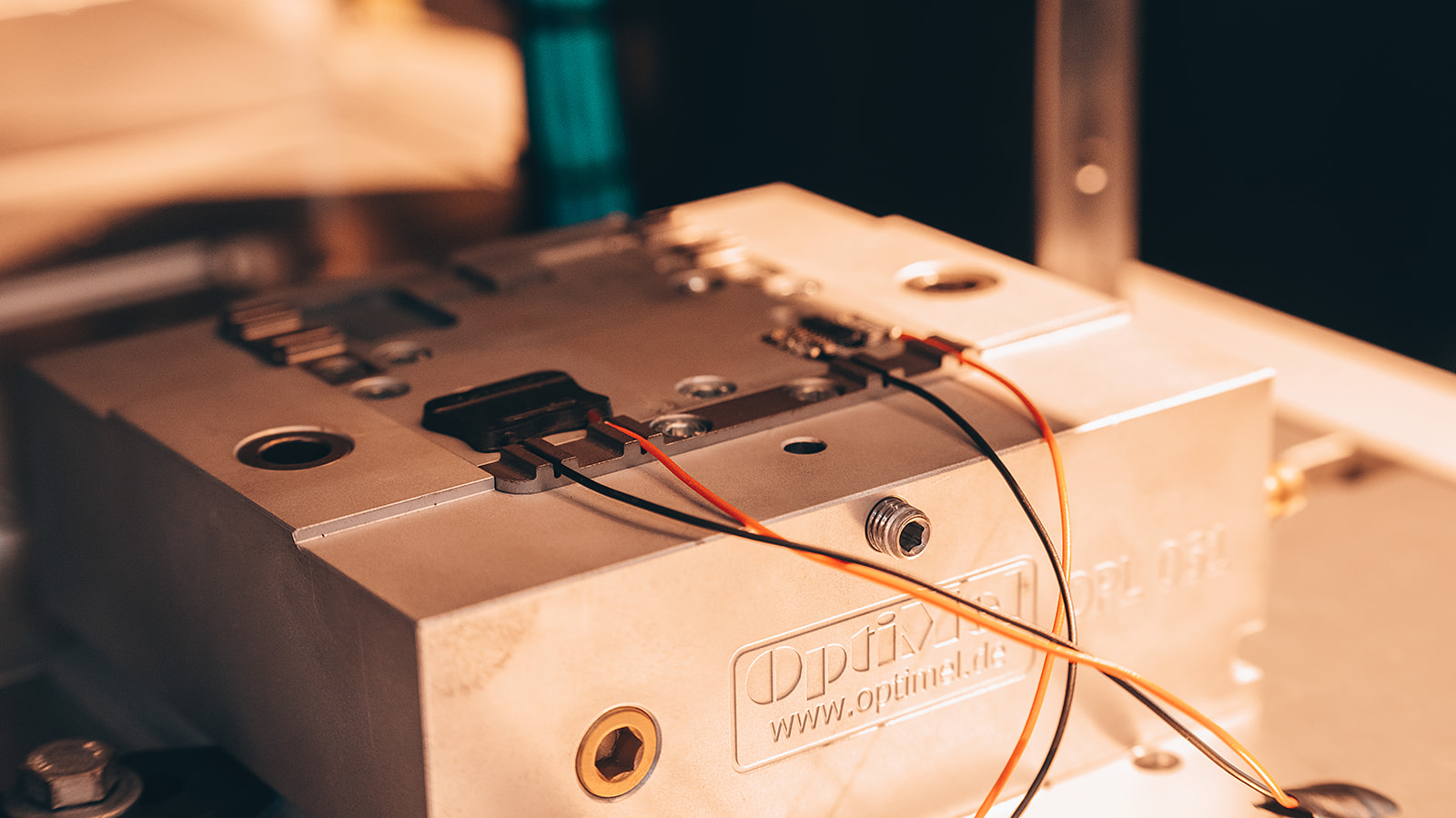
Smans supplies Optimel Low Pressure Moulding solutions for both manual and automated production environments. Based on the application, production volume and required level of automation, the most suitable configuration is selected together with the customer.
More Than a Protective Finish
Low Pressure Moulding is far more than an encapsulation technique. It is an integrated manufacturing process that combines protection, strain relief and mechanical reinforcement in a single operation.
For manufacturers of electronic components, sensors and cable assemblies, this results in improved product reliability, more compact designs and a more efficient production process. That is why Low Pressure Moulding has become an established technology for applications where quality, durability and reliability are essential.