Applying Heat-Shrink Tubing: Three Parameters That Determine Quality
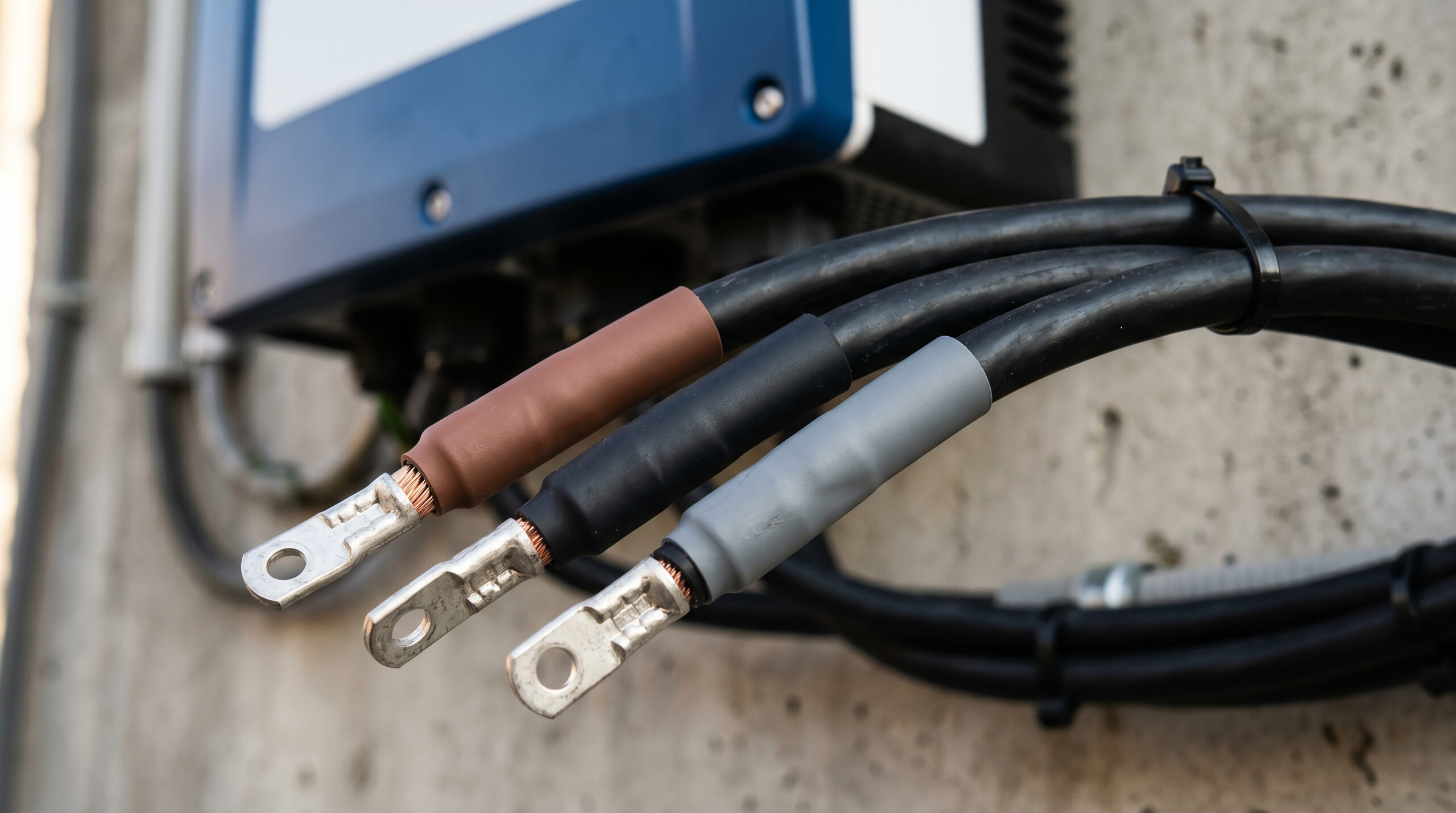
Applying heat-shrink tubing may seem like a simple finishing operation. Position it, apply heat, allow it to shrink, and the job is done.
But once you need to achieve the same quality tens, hundreds or thousands of times, the situation changes.
A reliable shrinking process is not simply about applying enough heat. The position of the heat-shrink tubing, the temperature and the heating time must all be controlled and aligned. Only then does the process become repeatable and the result less dependent on the individual operator.
A Good Result Starts Before Heat Is Applied
When working with heat-shrink tubing, most attention naturally goes to the heat source. However, there is already an important quality parameter before heating begins: the position of the tubing.
When heat-shrink tubing is used to protect an electrical connection, for example, it must be positioned correctly in relation to that connection. Perfectly controlled temperature and cycle time have little value if the tubing is positioned a few millimetres incorrectly and therefore fails to cover the entire area that needs protection.
In a manual process, the operator assesses and adjusts this position. In an automated process, the position can also be checked before the heating cycle begins. This means that not only the shrinking operation itself, but also its preparation becomes part of the controlled process.
Temperature and Time Determine the Shrink
Once the tubing is correctly positioned, two other variables come into play: temperature and time.
Insufficient heat may prevent the tubing from shrinking completely. Excessive temperature or prolonged exposure, on the other hand, may unnecessarily stress the heat-shrink material or the components underneath it.
When using a manual heat gun, these parameters are difficult to reproduce exactly. It is not only the set temperature that matters, but also the distance between the heat source and the product, the movement of the heat gun and the time for which a particular area is heated.
An experienced operator can achieve an excellent result this way. The real challenge arises when that result has to be identical for every cable assembly.
From Operator-Dependent to Repeatable
This is the fundamental difference between manual heating and a controlled shrinking process.
In a manual process, the operator largely determines:
- where the heat-shrink tubing is positioned;
- how the heat is applied;
- how long the tubing is heated.
In a controlled process, these variables are defined or monitored as much as possible.
With a controlled heat source, such as infrared heating, temperature and cycle time can be preset. With further automation, the position of the heat-shrink tubing can also be verified before heating begins.
The quality question therefore changes from “Has the operator applied this heat-shrink tubing correctly?” to “Has every piece of heat-shrink tubing been processed under the same controlled conditions?”
For series production of cable assemblies, that is a fundamental difference.
Automation Is Not Just About Working Faster
It is tempting to evaluate automation primarily in terms of cycle time. When processing heat-shrink tubing, however, that view is too limited.
The greater benefit may lie in reducing process variation.
An automated solution can, for example, verify that the heat-shrink tubing is correctly positioned before the heating cycle begins. The tubing is then shrunk according to predefined process parameters.
You are therefore not simply automating a manual operation. You are defining the conditions under which that operation is allowed to take place.
That distinction matters. A machine that heats faster increases productivity. A process that controls position, temperature and time also improves repeatability.
When Does a Controlled Process Become Relevant?
Not every application requires the same level of process control.
For occasional work or small quantities, manual shrinking can be a perfectly logical solution. An experienced operator can position and heat the tubing correctly without the need for further automation.
The situation changes when:
- larger quantities are produced;
- many identical connections need to be finished;
- variation between operators needs to be reduced;
- consistent product quality is important;
- the position of the heat-shrink tubing is critical.
At that point, the key consideration is no longer just speed, but above all process repeatability.
Position, Temperature and Time: Three Parameters, One Process
Processing heat-shrink tubing should therefore not be viewed solely as a heating operation.
Consistent processing depends on three interconnected parameters:
Position : Is the heat-shrink tubing exactly where it needs to be to perform its function?
Temperature : Is the correct thermal load being applied?
Time : Is that heat applied for the correct duration?
Only when these three parameters are controlled can the process be performed repeatably.
This principle applies regardless of the level of automation. The difference is that a controlled or automated system reduces dependence on individual operator actions and allows critical process parameters to be defined and monitored.
Conclusion
Applying heat-shrink tubing is simple. Applying it correctly under the same conditions every time is a process challenge.
Focusing solely on the heat source therefore overlooks an important part of the process. The position of the tubing before heating is just as relevant as the temperature and heating time during shrinking.
For series production of cable assemblies, this is where controlled processing delivers its real value: not simply achieving one good result, but ensuring that the next connection is processed under the same controlled conditions.
Related trainings