How to avoid tombstoning during PCB assembly
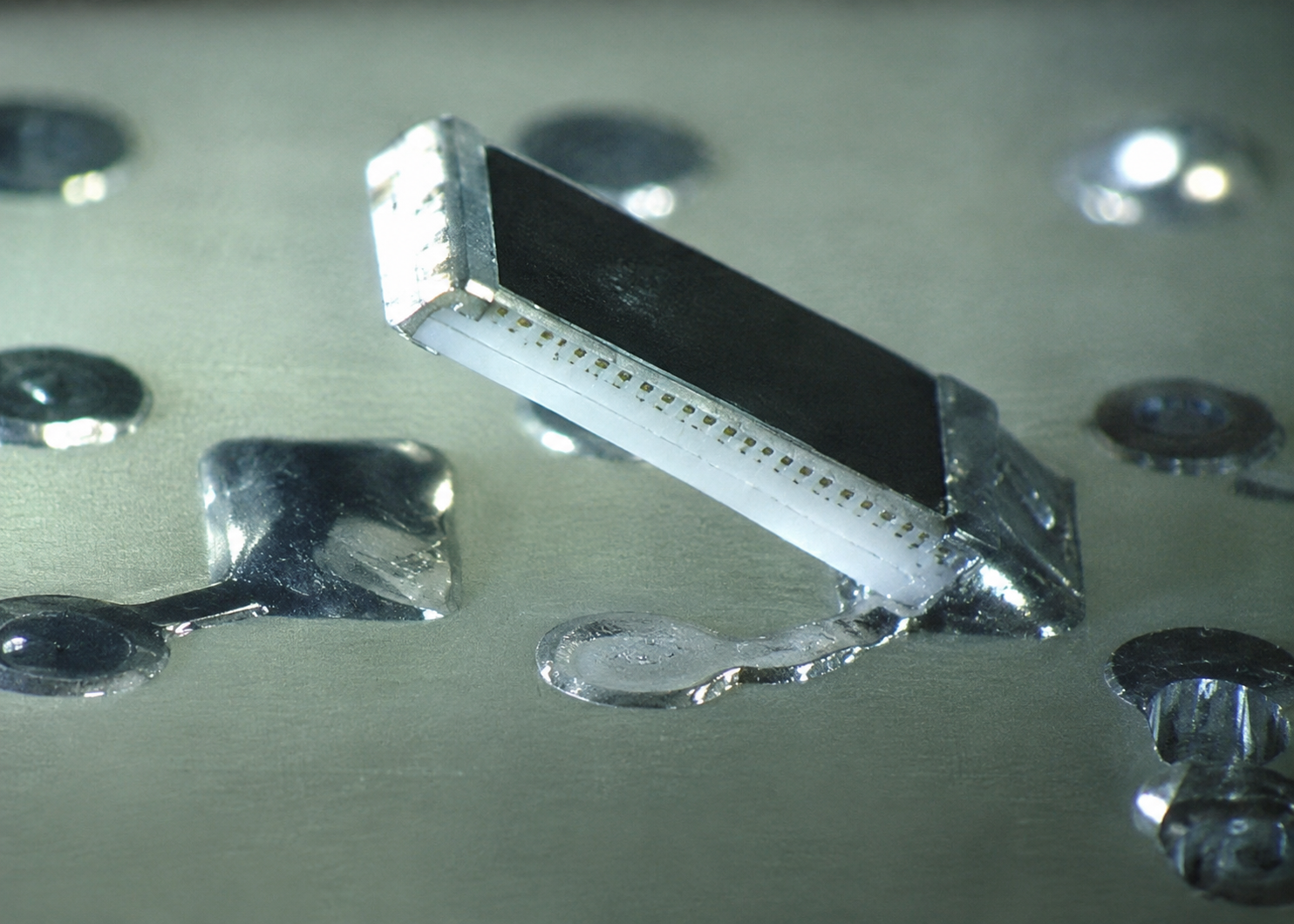
Tombstoning
A situation that occurs during the reflow soldering process, especially in a vapour phase or vapour phase reflow system.
It means that passive chip components such as resistors and condensers stand upright during soldering.
The cause of tombstoning
The cause of this problem is to be found in the accidental flow of solder paste on the two contact ends of the component. When one of the two ends goes into liquid phase in front of the other, the liquid solder paste pulls the component upright.
The uneven thermal loading of the connection surfaces of this component on the PCB is responsible for the uneven flow.
Methods of preventing tombstoning
There are several ways to address this soldering defect.
The most obvious, but also the most far-reaching, solution is to redesign the copper layers of the PCB so that the thermal load on the solder pads is balanced. This is a complex process that requires access to the design files as well as specialised expertise. In many cases, this is not a feasible option for a subcontract manufacturer.
Another approach is to modify the stencil design. This involves adjusting the shape and position of the solder paste deposits on the PCB pads. It requires a new stencil, specialised knowledge and, in most cases, a number of test runs.
A third option is to use a modified solder paste. Thanks to its specially formulated composition, the paste reflows evenly and simultaneously, helping to prevent this soldering defect. This solution has the least impact on the production process and does not require specialised knowledge from the operator.
Interflux® IF 9057 ATL is a SAC305 Type 4 solder paste with a built-in anti-tombstoning function. It leaves a clear, minimal residue after reflow soldering and is completely halogen-free.
Related trainings