What is a wire end ferrule?
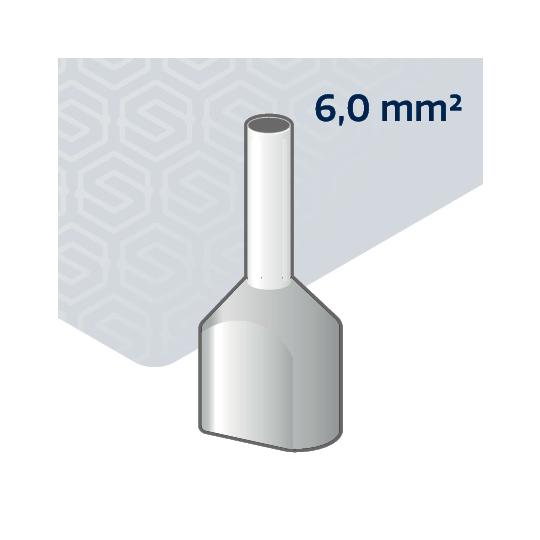
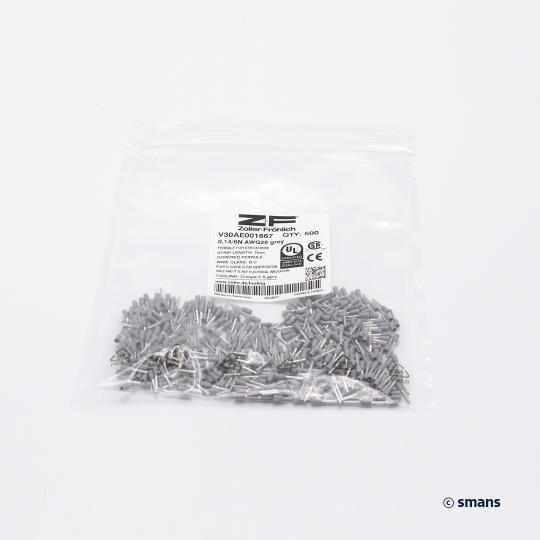
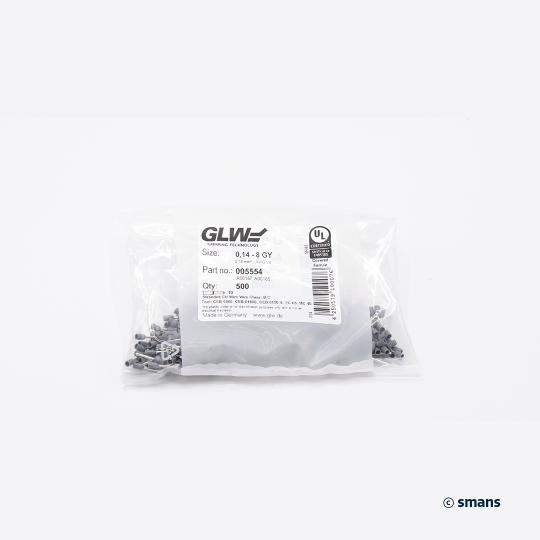
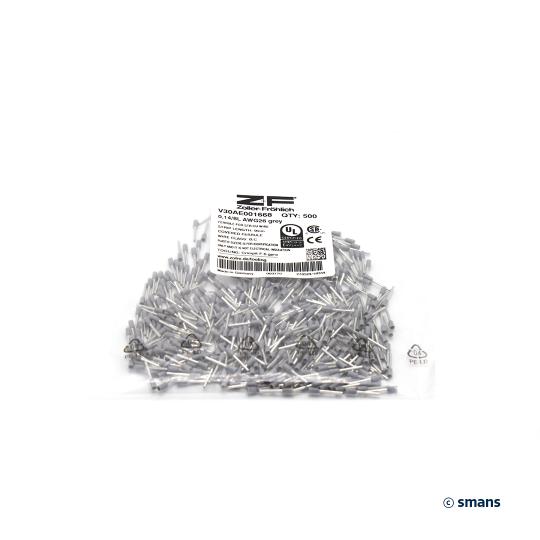
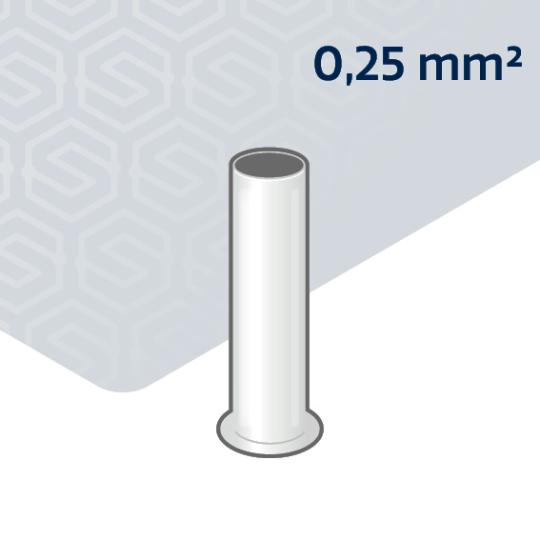
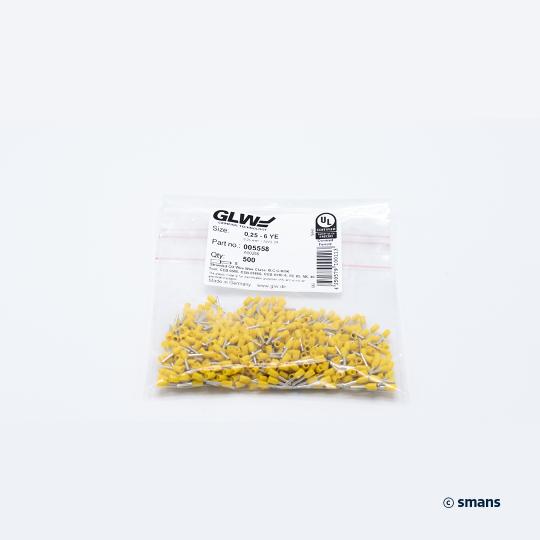
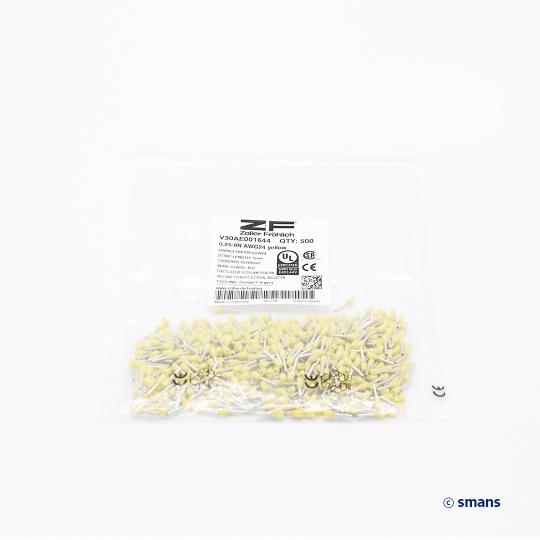
A wire end ferrule is a thin-walled copper tube that you slide over the stripped end of a flexible wire and crimp in place. This turns the loose copper strands into a solid unit that you can insert into the terminal in one go. Without a ferrule, those strands fan out: some of the copper misses contact, the connection heats up, and sooner or later something will fail. That’s exactly the kind of malfunction a technician spends hours trying to find.
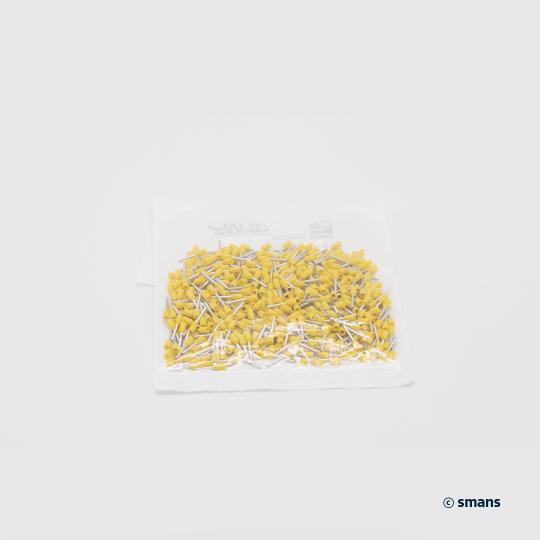
You may also come across terms like wire ferrules or terminal ferrules: they refer to the same product. Insulated ferrules have a colored plastic collar. That collar guides the wire into the ferrule and lets you see at a glance which size you’re holding.
What size and color do you need?
The rule is simple: the cross-sectional area of the sleeve is equal to that of the wire. If the cable is marked 1.5 mm², then use a 1.5 mm² sleeve. The collar color follows the DIN 46228-4 color code:
Fine wire, 0.14 to 4 mm²
| Cross-section |
Collar Color |
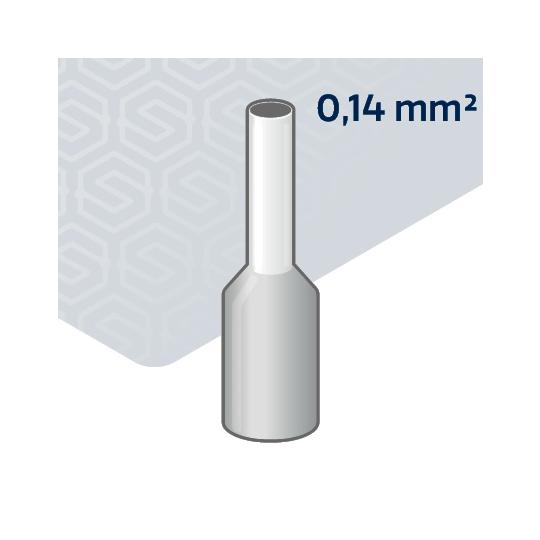
| 0,14 mm² |
Grey |
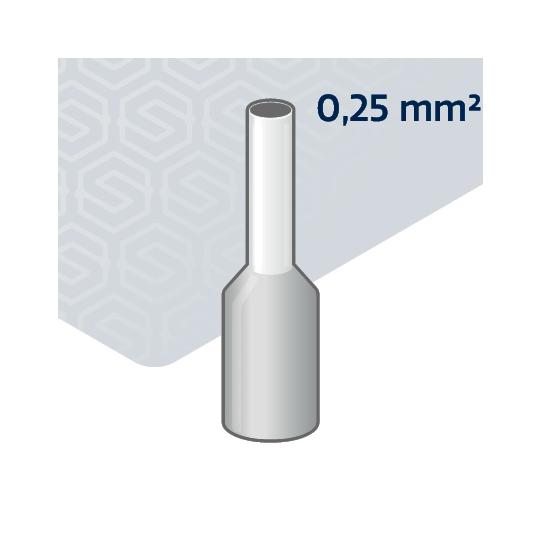
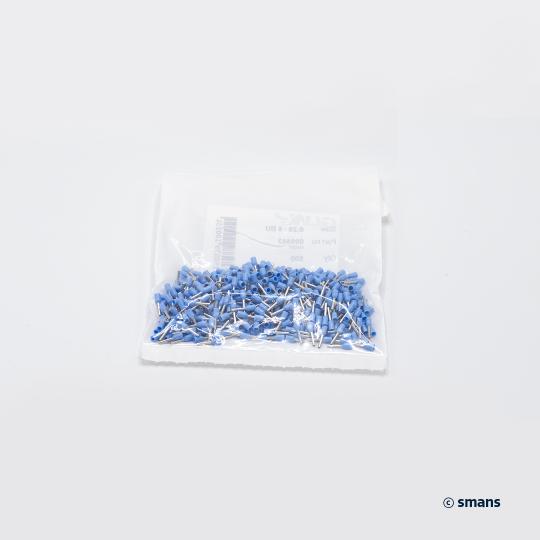
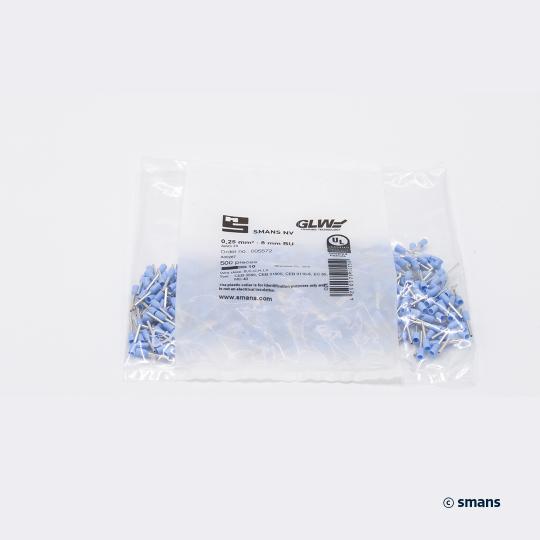
| 0,25 mm² |
Yellow or light blue |
| 0,34 mm² |
Turquoise |
| 0,5 mm² |
White |
| 0,75 mm² |
Grey |
| 1 mm² |
Red |
| 1,5 mm² |
Black |
| 2,5 mm² |
Blue |
| 4 mm² |
Grey |
Heavy-gauge wire, 6 tot 120 mm²
| Cross-section |
Collar Collor |
| 6 mm² |
Yellow |
| 10 mm² |
Red |
| 16 mm² |
Blue |
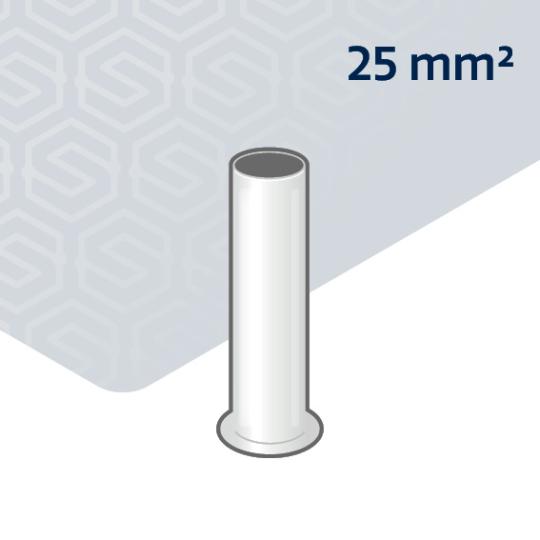
| 25 mm² |
Yellow |
| 35 mm² |
Red |
| 50 mm² |
Blue |
| 70 mm² |
Yellow |
| 95 mm² |
Red |
| 120 mm² |
Blue |
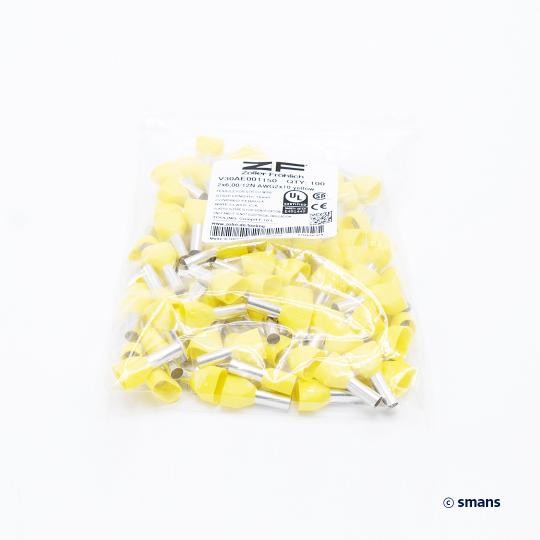
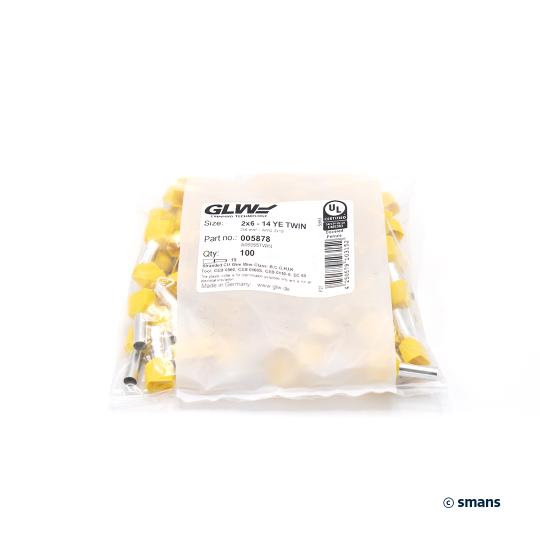
Starting at 6 mm², the color sequence repeats: yellow is used for 6, 25, and 70 mm². So for heavy-gauge sizes, be sure to check the imprint on the collar, not just the color.
In addition, choose a sleeve length from 5 to 32 mm. Rule of thumb: the thicker the wire and the deeper the terminal, the longer the sleeve. For standard terminal blocks up to 2.5 mm², 8 mm is the most commonly chosen length.
Insulated, uninsulated, or twin
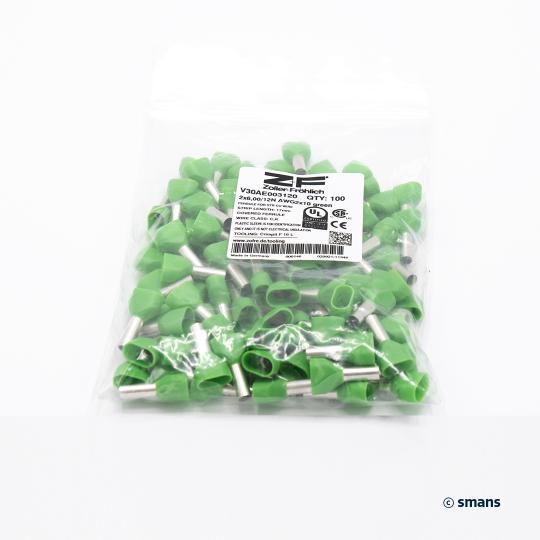
Insulated is the standard in panel building: the collar makes insertion faster, and the color prevents sizing errors. Choose uninsulated when space is limited or in high-temperature environments. With a twin sleeve, you can connect two wires to a single terminal—handy for looping through power.
It’s best not to crimp wire by wire
Crimping pliers may seem like the cheapest solution—until you start counting. Anyone who measures, strips, slips a sleeve onto, and crimps each wire by hand will manage no more than about twenty finished wires per hour. And every crimp is slightly different, depending on who’s at the workbench that day.
That’s why our customers choose semi-automatic crimping. A wire crimping machine strips and crimps in a single motion, with a consistent crimp height that you can measure and document. Expect fifty to one hundred twenty wires per hour, with the same quality every day. We’ll help you choose the machine that fits your production volumes.
High volumes? Check out ultrasonic compaction
If you process thousands of wires every week, you can even skip the sleeve entirely. With ultrasonic compaction, the copper wires are cold-compacted against each other using high-frequency vibrations to form a solid end. No sleeve, no heat, and zero sleeves on your bill of materials. This technology is available as a standalone benchtop unit or integrated into a fully automated line.
Not sure which option is best for your production—shrinking sleeves or ultrasonic compaction? Our specialists will work it out with you. If you use large quantities of sleeves each year, set up an annual purchase agreement: we’ll set aside stock for you so your production never comes to a standstill.
Buy Wire End Sleeves from Smans
Over 300 SKUs in stock, ranging from 0.14 to 120 mm². Filter above by brand, cross-section, length, and color, or let us know what you need. We’ve been supplying panel builders and cable processors in Belgium and the Netherlands for over fifty years. Contact us for volume pricing or an annual purchase agreement.