Ultrasonic Wire Welding: When Is It the Right Choice?
Ultrasonic Wire Welding: When Is It the Right Choice?
Ultrasonic wire welding is increasingly used in the production of cable assemblies and electrical connections. However, there are still many misconceptions about this technology. It is often assumed that ultrasonic welding is a universal alternative to crimping or splicing, or that it is suitable for every application.
In reality, the answer is more nuanced.
Ultrasonic welding offers significant advantages, but only when applied in the right context. Choosing this technology should therefore start with the application requirements rather than the machine itself.
Ultrasonic Welding Is Not a Replacement for Every Connection Method
One common misconception is that ultrasonic welding is always the best solution.
This is not the case.
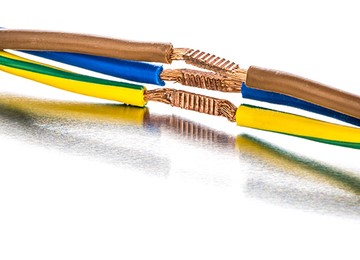
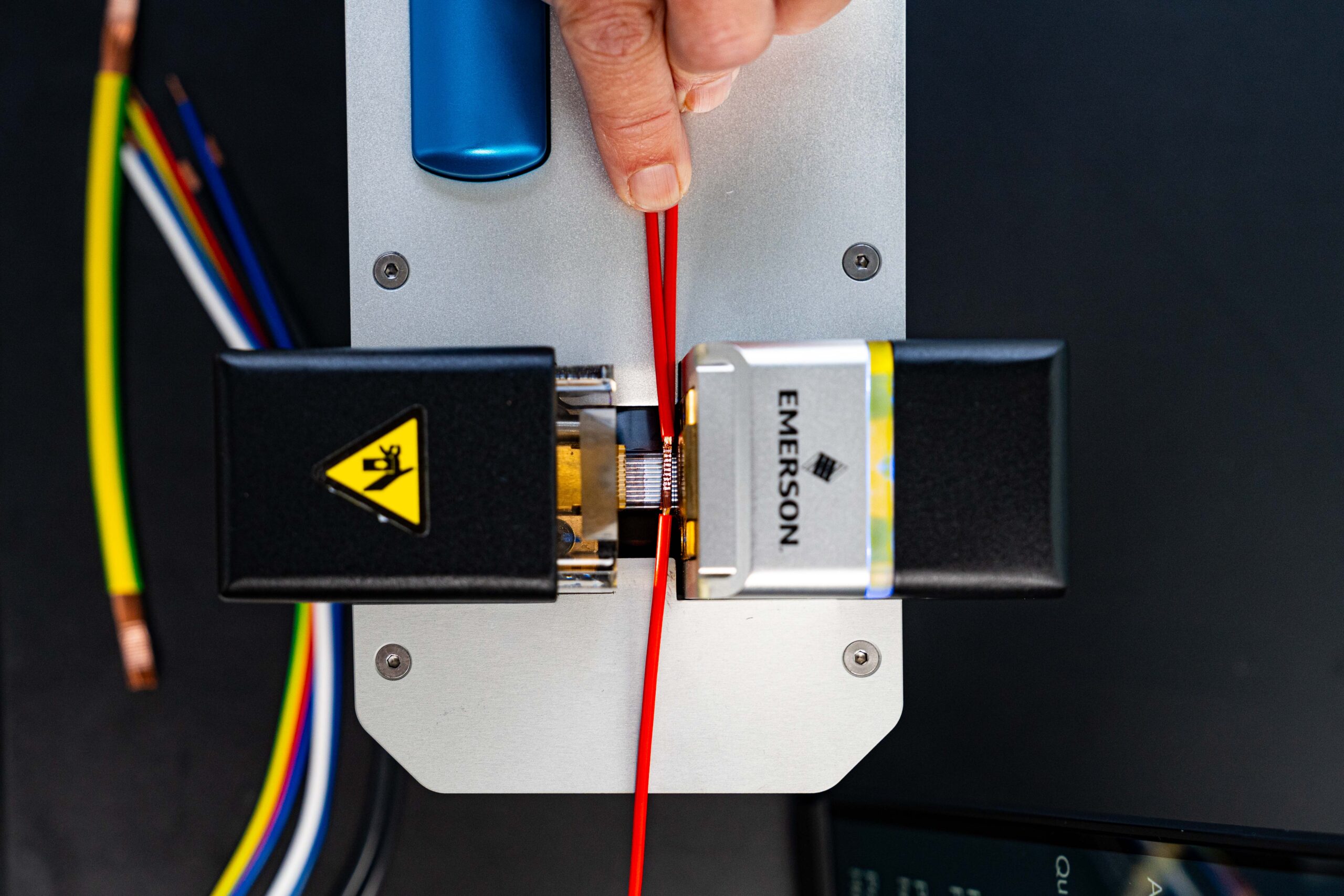
Ultrasonic welding joins copper conductors directly without the need for terminals, ferrules or splice connectors. This creates a compact connection while reducing the number of components in the cable assembly.
As a result, ultrasonic welding is particularly suitable for applications where installation space is limited or where reducing the number of components is a design objective.
When a wire must be connected to a terminal, connector or ferrule, crimping remains the preferred joining method. Ultrasonic welding therefore addresses a different engineering challenge than crimping or splicing.
Process Parameters Depend on the Connection
There is no universal welding program that works for every application.
The welding parameters are determined by the total copper cross-section of the connection and the combination of conductors being joined. A different wire configuration may therefore require different process settings.
A reliable welding process starts with understanding the connection that needs to be created rather than selecting a predefined machine program.
Not Every Material Combination Is Suitable
Material selection also plays an important role.
Ultrasonic welding is primarily used for copper conductors. For other material combinations, the suitability of the process should always be evaluated before production starts. In some cases, another joining technology may provide a better solution.
Selecting ultrasonic welding is therefore always the result of an engineering decision rather than a preference for one particular technology.
An Ultrasonic Weld Is Not Automatically Waterproof
Another common misconception is that an ultrasonic welded connection is automatically sealed against moisture.
Although the weld itself may meet the required mechanical and electrical specifications, the transition between the conductor insulation and the exposed conductor remains a potential entry point for moisture.
Where environmental protection is required, the sealing of the connection must therefore be considered as part of the overall design. Depending on the application, additional protection such as heat shrink tubing or another sealing method may be required.
Technology Is Only One Part of a Reliable Process
As with any joining technology, the machine alone does not determine the final quality.
A reliable ultrasonic welding process requires the correct process parameters, appropriate material selection and a stable production process. Only when these factors work together can manufacturers achieve consistent and repeatable results.
That is why ultrasonic welding is selected not because it is more advanced, but because it best matches the requirements of the application.
Ultrasonic Welding in Practice
Conclusion
Ultrasonic welding is not a universal alternative to crimping or splicing. It is a specialised joining technology designed for specific applications.
The right choice depends on the function of the connection, the materials involved and the performance requirements of the final product. Understanding these factors is the key to selecting the most appropriate joining technology.
Related trainings